Interior design is no longer just about what a space looks like—it’s about how it feels. The most memorable interiors engage the senses, create emotional connections, and subtly influence mood and behavior. One of the most powerful yet underutilized elements in achieving this is the indoor water feature. Far from being a luxury reserved for high-end spaces, water features are becoming an essential design tool for homeowners and designers seeking to elevate interiors in both form and function.
At its core, a well-placed indoor water feature introduces movement into an otherwise static environment. While furniture, artwork, and décor provide structure and visual interest, they remain still. Water, on the other hand, is dynamic. The gentle flow or cascading motion creates a natural focal point that draws the eye and anchors the room. This sense of movement adds depth and dimension, making spaces feel more alive and thoughtfully curated.
Beyond visual appeal, water features significantly enhance the sensory experience of a space. The sound of flowing water has been widely studied for its calming effects. According to research published by the National Institutes of Health, natural sounds like water can reduce stress, lower heart rate, and improve overall mental well-being. Incorporating this auditory element into an interior transforms the environment from simply “designed” to genuinely restorative. In busy households or high-stress workspaces, this subtle background sound can make a meaningful difference in daily life.
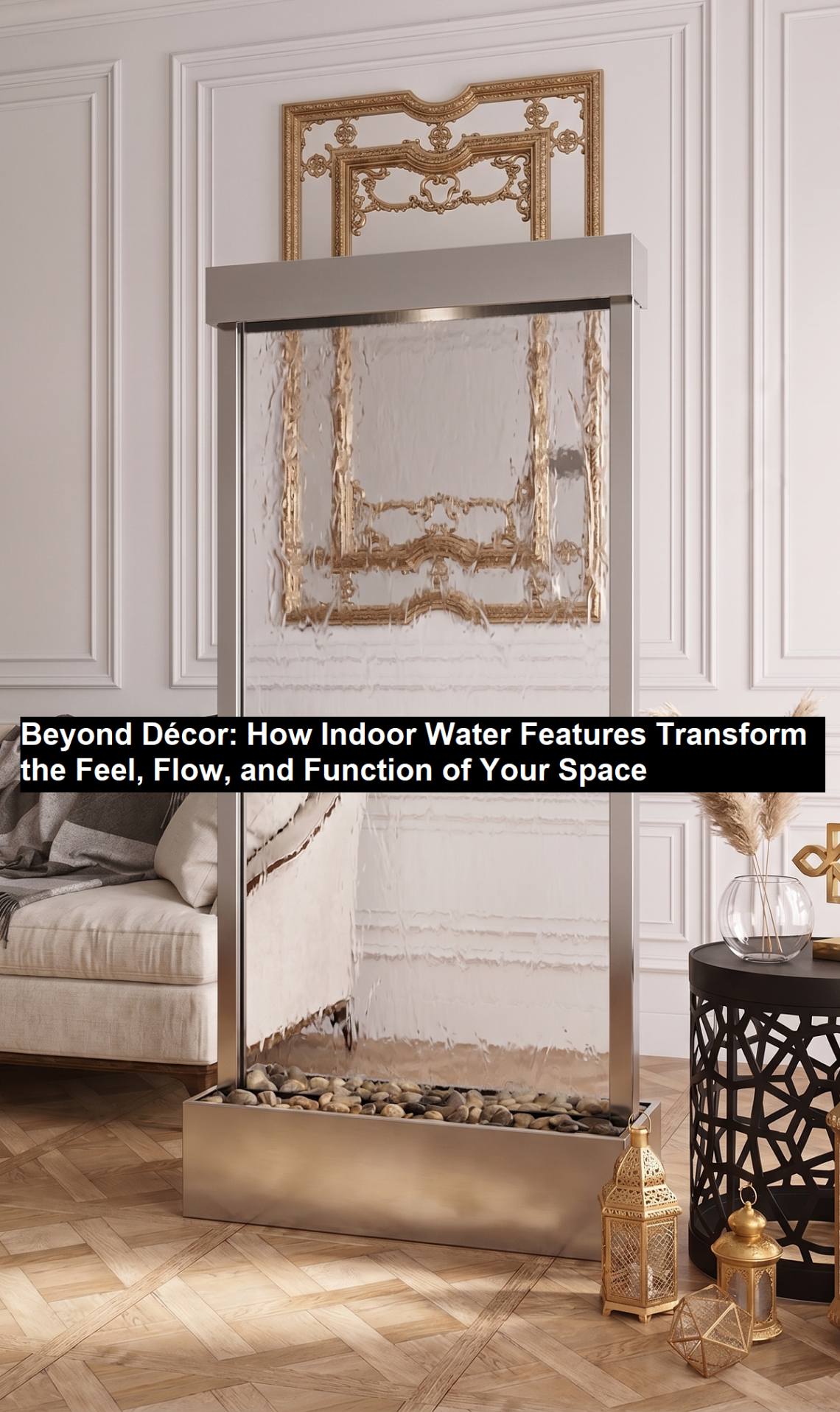
From a design perspective, indoor water features are remarkably versatile. They can complement nearly any aesthetic—from modern minimalism to rustic warmth or traditional elegance. Sleek wall-mounted fountains with clean lines and neutral tones pair beautifully with contemporary interiors, while stone or textured designs can enhance more organic or nature-inspired spaces. This adaptability allows designers to integrate water features seamlessly rather than treating them as an afterthought.
Another often overlooked benefit is how water features influence spatial perception. In smaller rooms, a vertical wall fountain can draw the eye upward, creating the illusion of height. In larger open-concept areas, a freestanding water feature can act as a subtle divider, defining zones without the need for walls or bulky furniture. This ability to shape how a space is experienced makes water features not just decorative elements, but functional design assets.
Read: The 25 Most Costly Homes In The World For Sale
Lighting also plays a crucial role in maximizing the impact of indoor water features. When paired with strategic illumination, moving water reflects light in unique and ever-changing patterns. This interplay of light and motion adds a layer of sophistication that static décor simply cannot replicate. Soft, integrated lighting can create a calming ambiance in the evening, while natural daylight enhances the texture and clarity of the water during the day.
Incorporating an indoor water feature also aligns with a growing trend toward biophilic design—the practice of connecting interior spaces with elements of nature. As people spend more time indoors, there is an increasing desire to bring natural experiences inside. Water features contribute to this by introducing an element that feels inherently organic and grounding. This connection to nature has been shown to boost creativity, improve focus, and enhance overall well-being.
For those looking to make a statement while also improving the atmosphere of their home or business, brands like Adagio Water Features offer customizable solutions that blend artistry with functionality. Whether it’s a dramatic floor-to-ceiling installation or a subtle accent piece, the right water feature can become the defining element of a room.
Ultimately, indoor water features do more than enhance interior design—they transform it. They engage multiple senses, influence how spaces are perceived, and create an environment that feels intentional and immersive. In a world where design is increasingly about experience rather than just appearance, water features stand out as a timeless and impactful addition to any interior.